
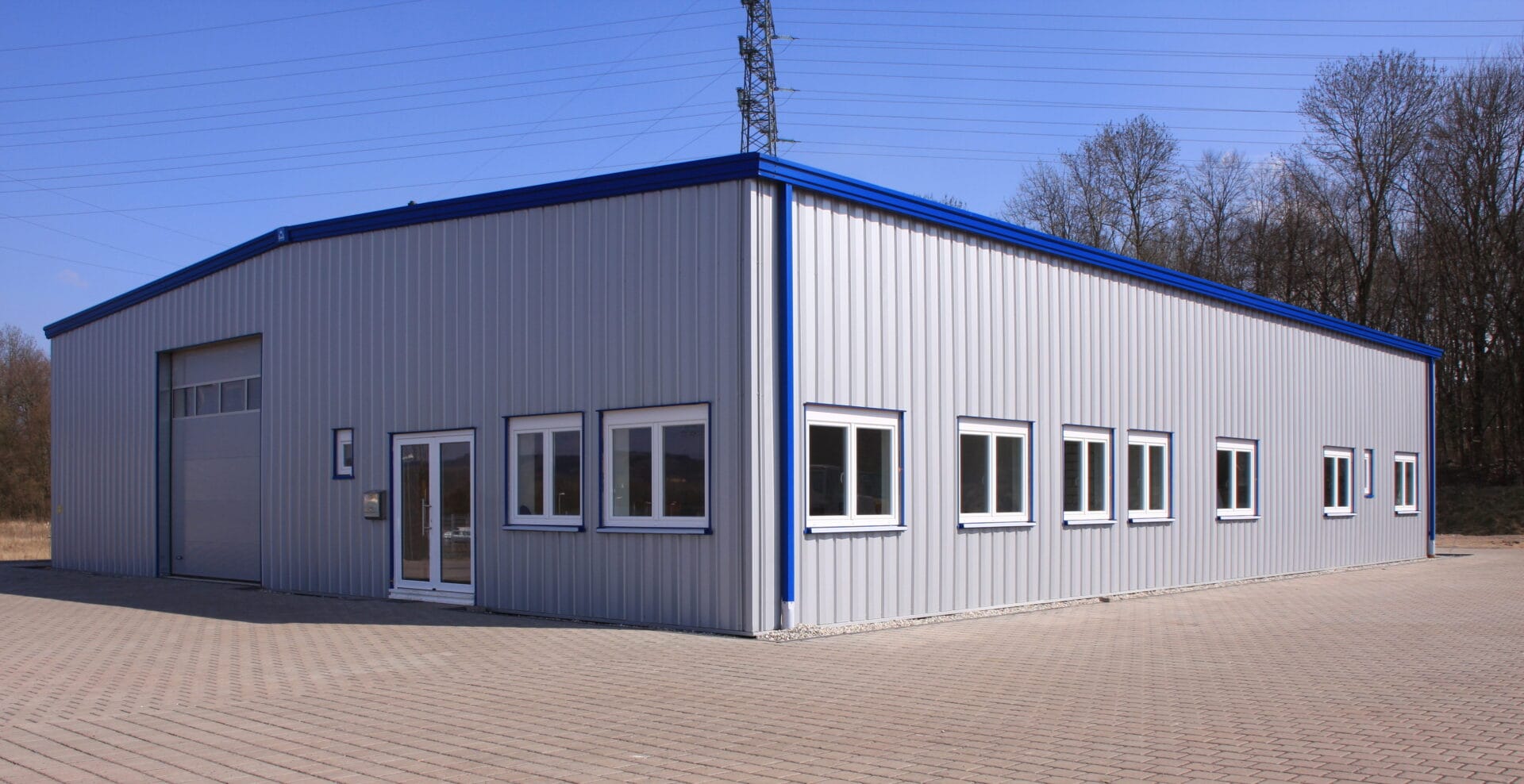
Pre-Build Energy Variables: What Drives Your Operating Costs before You Break Ground
The operating costs for climate controlled steel buildings are largely determined by decisions you make during design and construction. Once the building is standing, your ability to influence energy consumption narrows significantly. These are the variables to get right before you build.
- Climate zone is the most important factor. IECC climate zones 1 through 3 (Southern states, Gulf Coast, Florida) are cooling-dominated, which means your HVAC runs hardest during summer months and your primary concern is keeping heat and humidity out. Zones 5 through 7 (Northern states, Mountain West) are heating-dominated, where winter energy costs are the bigger line item. Zones 4 and mixed-humid zones face both challenges across seasons.
- Insulation R-value directly affects how hard your HVAC system works. Higher R-values reduce heat transfer through the envelope, which lowers both heating and cooling loads. The difference between R-13 walls and R-19 walls can shift annual HVAC costs by 15 to 25 percent.
- Temperature setpoints should follow the storage industry standard of 55°F to 85°F, not the 72°F office comfort standard. Maintaining 72°F year-round in a storage building wastes energy and inflates operating costs with no benefit to stored goods.
- Building size and orientation affect solar heat gain and surface-area-to-volume ratio. Larger buildings are more energy-efficient per square foot because they have less exterior surface area relative to their conditioned volume. Orienting the building to minimize western sun exposure on the longest wall faces reduces cooling loads in warm climates.
- Occupancy patterns matter more than most operators realize. Every time a tenant opens an exterior door or building entry, conditioned air escapes and unconditioned air enters. Facilities with high daily traffic lose more energy through air exchange than low-traffic facilities. Entry vestibules, automatic door closers, and air curtains all help reduce this loss.
HVAC Utility Cost Modeling by Building Size and Region
The industry benchmark for climate controlled storage utility costs is roughly 2 to 3 cents per square foot per month for HVAC alone. Here is how that translates across different building sizes and climate regions.
20,000-square-foot facility
In a Southern market (cooling-dominated, IECC zone 2 or 3), expect monthly HVAC costs of roughly $500 to $600 during peak summer months, with lower costs in winter. Annual HVAC utility expense typically lands in the $4,800 to $6,000 range.
In a Northern market (heating-dominated, IECC zone 5 or 6), summer cooling costs are lower, but winter heating pushes annual totals to a similar range of $4,500 to $5,500 per year, with the seasonal distribution shifted toward the colder months.
50,000-square-foot facility
In a Southern market, monthly HVAC costs during peak summer can reach $1,200 to $1,500, with annual totals in the $12,000 to $15,000 range. In a Northern market, annual HVAC costs for the same footprint typically run $11,000 to $14,000, weighted toward heating season.
These ranges assume R-19 insulation, standard efficiency HVAC equipment, and the 55°F to 85°F setpoint range. Better insulation, higher-efficiency equipment, and tighter air sealing can reduce these numbers by 15 to 25 percent.
Insulation Payback Analysis: When Better Insulation Pays for Itself
Upgrading insulation increases your construction cost but reduces your annual HVAC expense. The payback period depends on how big the upgrade is, your local utility rates, and your climate zone.
As a directional example, upgrading from R-19 fiberglass batts to a closed-cell spray foam assembly delivering R-30 on a 20,000-square-foot climate-controlled building in a Southern market might add $30,000 to $50,000 in construction cost. If the tighter envelope and higher R-value reduce annual HVAC costs by $1,500 to $2,500, the payback period falls in the 3 to 6 year range. After payback, those savings continue for the remaining life of the building.
The math becomes even more favorable when you factor in reduced condensation risk, lower HVAC maintenance costs (the equipment runs fewer hours at lower load), and the potential for smaller HVAC equipment sizing on the initial install. For a detailed comparison of insulation types and their performance characteristics, see our insulation options guide.
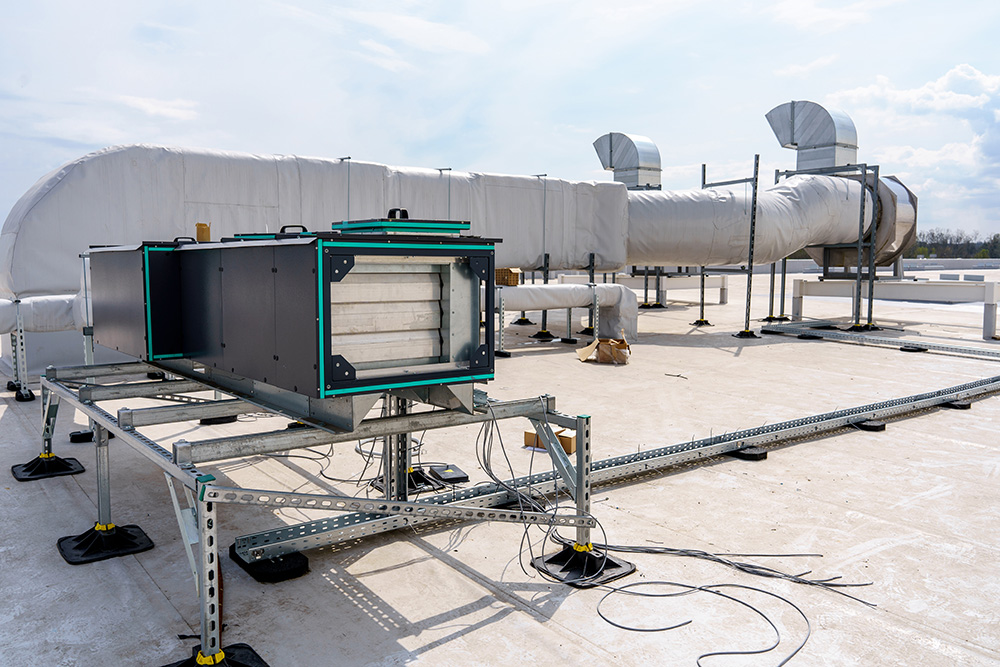
Dehumidification Cost: a Modest Expense with Outsized Impact
Central dehumidifiers integrated into the air handler system add upfront cost (typically $3,000 to $8,000 per unit depending on capacity and brand), but their operating cost is modest. Running a commercial dehumidifier on a 20,000-square-foot facility in a humid market adds roughly $50 to $100 per month in electricity.
That expense is small relative to the protection it provides. Dedicated dehumidification keeps relative humidity below the 55 to 65 percent threshold, which prevents mold, musty odors, and moisture damage to tenant belongings. It also protects you from liability claims and negative reviews that can erode occupancy and rental rates far more than the cost of running the equipment.
The dehumidification expense is easily offset by the rent premium climate-controlled units command. If your climate-controlled units generate even $0.50 per square foot per month more than standard units, the incremental revenue on 20,000 square feet is $10,000 per month. The dehumidifier costs less than 1 percent of that premium.
For a full revenue comparison, see our climate controlled storage revenue analysis.
Ongoing Maintenance Checklist for Climate-Controlled Facilities
Consistent preventive maintenance keeps operating costs predictable and extends the life of your mechanical systems. Build these items into your facility management schedule.
Quarterly: Replace HVAC air filters (dirty filters increase energy consumption by 5 to 15 percent and reduce airflow). Check condensate drain lines for clogs. Inspect weatherstripping and door seals at all building entries and loading points. Verify dehumidifier operation and drain routing.
Biannually (spring and fall): Adjust seasonal temperature setpoints if your facility uses a wider range within the 55°F to 85°F window. Inspect roof panels, gutters, and downspouts for damage or blockages that could cause water intrusion. Check all air-sealing details at penetrations, transitions, and expansion joints.
Annually: Schedule a professional HVAC inspection and servicing (refrigerant levels, compressor condition, electrical connections, blower performance). Inspect insulation and vapor barrier condition in accessible areas. Review energy consumption data against the prior year to identify unexpected increases that may signal equipment degradation or envelope failures. Calibrate humidity sensors and temperature monitoring systems.
Following this schedule helps you catch small problems before they become expensive repairs, and it keeps your HVAC system running at peak efficiency throughout the year.
Total Annual Operating Cost Ranges by Facility Size
The numbers below provide ballpark annual operating cost ranges for climate-controlled self-storage facilities. These include HVAC utilities, lighting, insurance, routine maintenance, and basic management overhead. They do not include debt service, property taxes, or marketing.
- A 20,000-square-foot climate-controlled facility typically runs $50,000 to $90,000 per year in total operating expenses, or roughly $2.50 to $4.50 per square foot annually.
- A 40,000-square-foot facility generally falls in the $90,000 to $160,000 per year range. Per-square-foot costs tend to drop slightly at this scale because certain fixed costs (management, insurance base premiums, security systems) spread across more rentable area.
- A 60,000-square-foot facility typically operates in the $130,000 to $220,000 per year range. Larger facilities benefit further from economies of scale on management, maintenance contracts, and insurance.
These ranges are directional. Your actual operating costs will depend on your climate zone, insulation quality, HVAC efficiency, utility rates, staffing model, and management structure.
Build an Energy-Efficient Climate-Controlled Facility from Day One
The most effective way to control operating costs is to build the right envelope and specify the right equipment from the start. TruSteel provides climate-controlled steel building kits with factory-installed insulation options and county-specific stamped plans engineered to your location’s code requirements. Every package includes 100% steel construction and a 30-year manufacturer’s warranty on panels and columns.
For a full overview of climate-controlled building design, construction methods, and market positioning, see our climate controlled steel buildings guide. For detailed guidance on building envelope and HVAC system selection, see our guide on how to build climate controlled storage units.
If you have a zip code, a target footprint, and a facility model in mind, you have enough to get started. Contact TruSteel Buildings today for a free quote!