

Four Scope Tiers: Understanding What You Are Actually Buying
The confusion around steel building kit vs turnkey construction usually comes down to scope. Two developers can both say they are “buying a steel building,” but one is purchasing a materials package and the other is purchasing a finished facility. The cost difference between those two things is significant, and misunderstanding the scope is the fastest way to blow a budget.
Here are the four scope tiers you will likely encounter when shopping for a steel building.
Tier 1
Tier 1: Kit only
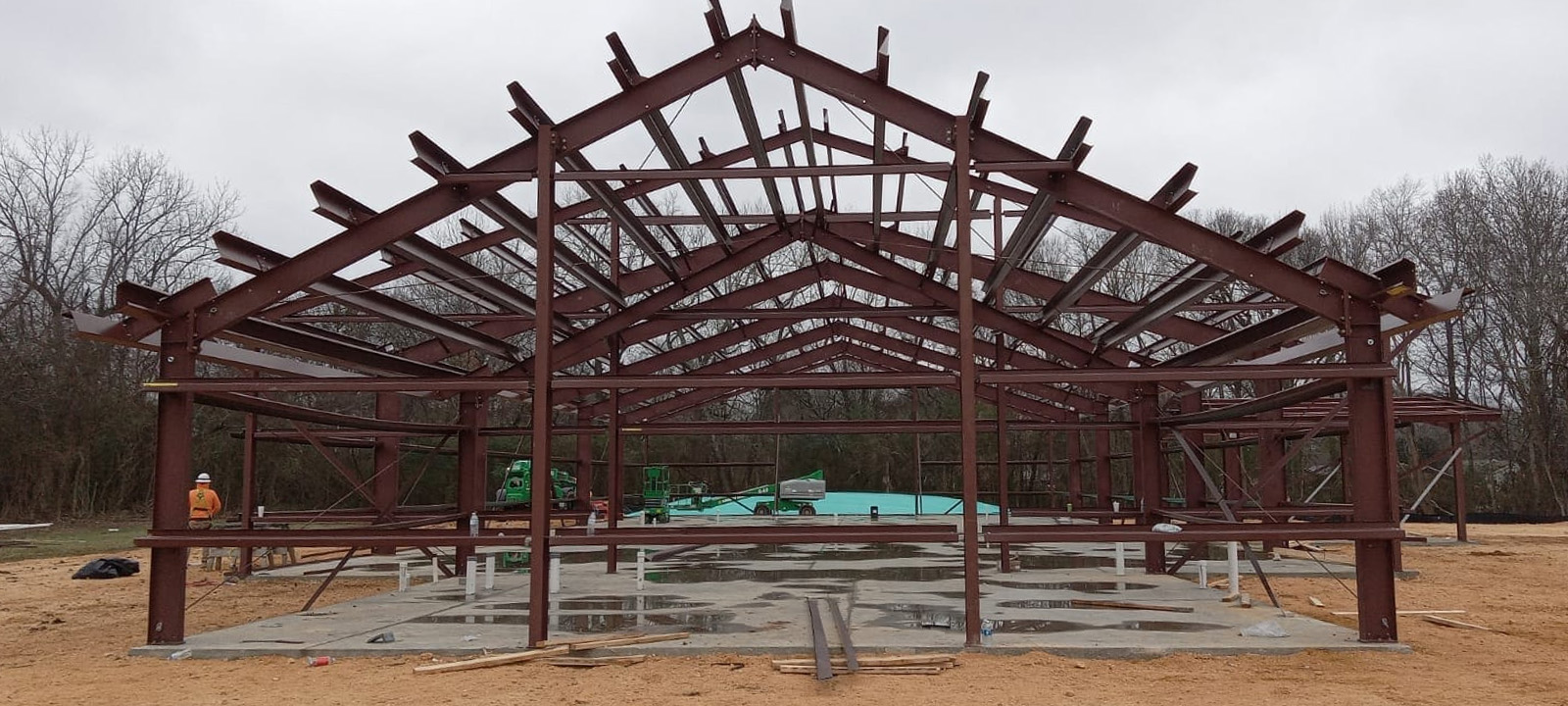
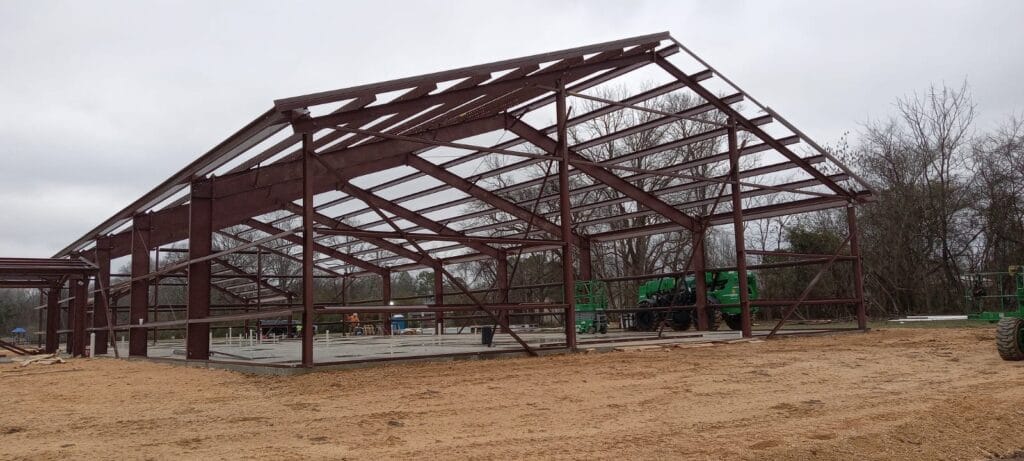
A kit-only purchase includes the pre-engineered steel components: primary framing (red iron columns and rafters), secondary framing (girts and purlins), roof panels, wall sheeting, trim, closures, and fasteners. The package ships to your site on flatbed trailers. You supply everything else.
This is the most affordable entry point, but it is only the building materials. You are responsible for hiring a general contractor, erection crew, foundation contractor, electrician, and any other trades needed to turn those components into a standing, usable building.
Tier 2
Tier 2: Kit + erection
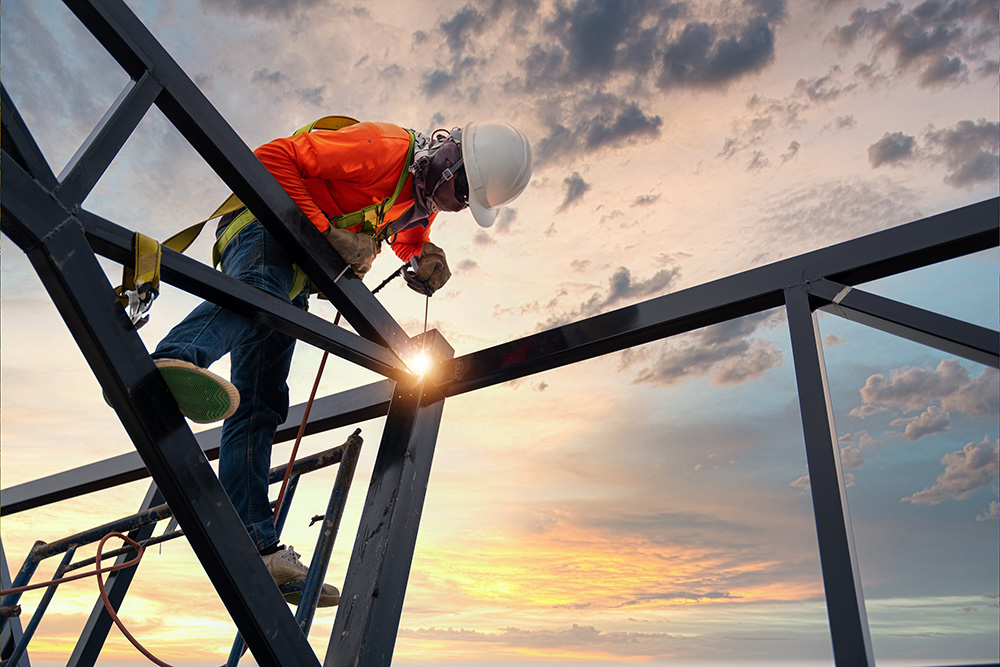
This tier adds a crew to assemble the steel structure on your prepared foundation. You receive the same materials package as Tier 1, plus labor to bolt the frame together, install panels and sheeting, and complete the exterior envelope.
After erection, you still need to coordinate foundation (poured before erection), interior buildout, electrical, plumbing, insulation, doors, and any site work. The building is weather-tight but not occupancy-ready.
Tier 3
Tier 3: Kit + erection + buildout
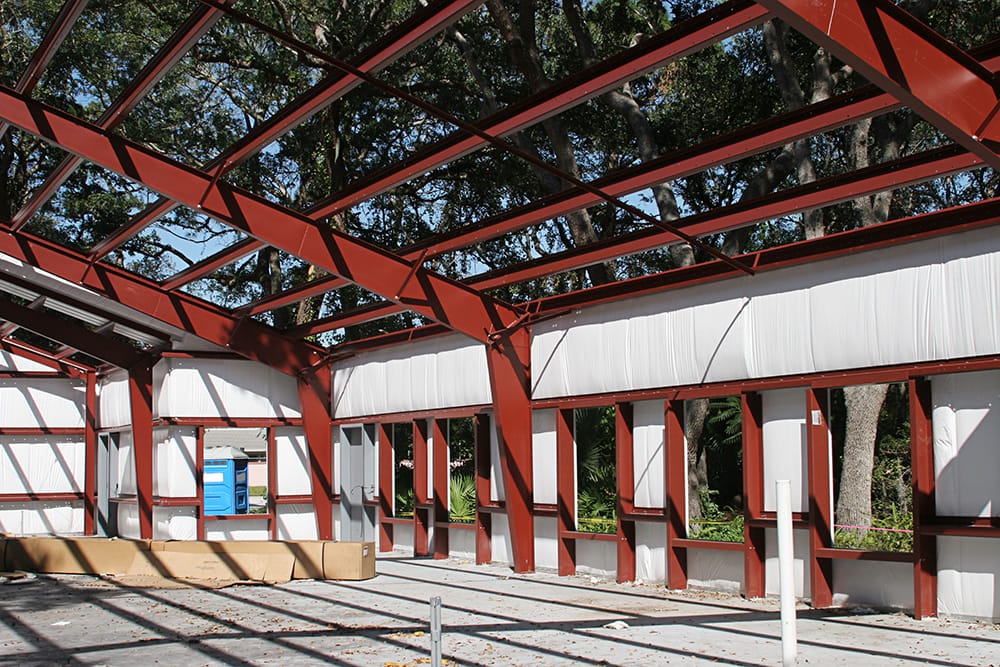
This tier adds interior work to the erected shell. Depending on the provider, buildout may include partition walls, roll-up doors, insulation, interior liner panels, electrical wiring, lighting, and basic finishes. The scope varies, so get a detailed line-item breakdown before comparing quotes at this level.
Tier 4
Tier 4: Turnkey / design-build
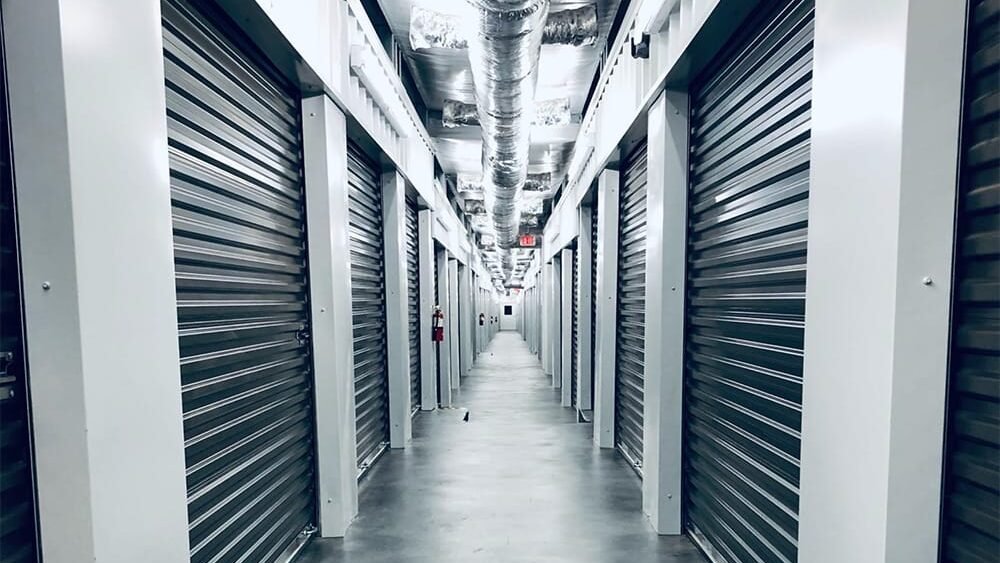
A turnkey or design-build contract covers the full project from start to finish: entitlements and permitting, site work and grading, foundation, building package, erection, interior buildout, MEP (mechanical, electrical, plumbing), fire suppression, security, signage, and sometimes project management through certificate of occupancy.
This is the most expensive tier per square foot, but it provides a single point of accountability for the entire project. You are buying a finished facility, not a box of parts.
Cost Comparison: Kit Price Is Not Project Price
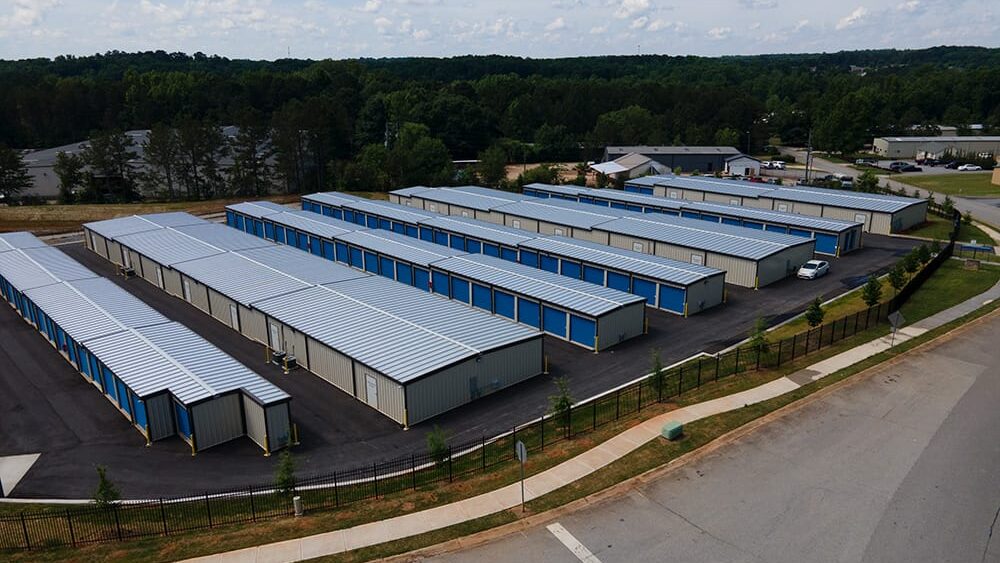
The cost difference between tiers is substantial, and confusing kit cost with project cost is the single most common budgeting mistake in steel building construction.
For example, kit-only materials for a pre-engineered steel building could run $12 to $20 per square foot depending on building size, complexity, and current steel pricing. Add erection labor and you are looking at another $5 to $10 per square foot. A full turnkey project with site work, foundation, buildout, and all trades can reach $45 to $75 or more per square foot for a completed, occupancy-ready facility.
That gap between $12 and $75 is not markup. It is scope. The kit is one line item in a project that includes many others.
What Is Not Included in a Steel Building Kit
If you are buying kit-only or kit-plus-erection, you need to budget separately for every item below. These are not optional extras. They are required to turn a steel building kit into a functioning facility.
Foundation and concrete slab, site work including grading, drainage, and utility connections, building permits and engineering review fees, insulation (roof and walls), interior partition walls, roll-up doors and hardware, electrical wiring, panels, and lighting, plumbing (if restrooms or drains are included), HVAC systems (required for climate-controlled buildings), fire suppression and sprinkler systems (if required by code), security systems including cameras, access control, and fencing, signage and wayfinding, and landscaping and exterior finishes.
When you add these items to the kit cost, the total project cost will land in the same range as a turnkey quote. The difference is who manages the scope: you and your GC, or a single design-build provider.
When Kit-Only Makes Sense
A kit-only purchase is a strong choice when you have an experienced general contractor who knows steel building erection and can coordinate all trades on your behalf. It also works well when you are adding buildings to an existing facility where site work, utilities, and access are already in place. Owner-operators who want to self-manage subcontractors to control costs and schedule also benefit from the kit approach, as long as they have the project management bandwidth to handle it.
The kit model keeps the building package cost transparent and gives you full control over trade selection, scheduling, and quality. TruSteel’s mini storage steel building kits include stamped building and foundation plans specific to your county, which gives your GC a code-ready plan set from day one.

When Turnkey Makes Sense
Turnkey construction is the better fit when you are a first-time developer without an established GC relationship or construction management experience. It also makes sense for out-of-state investors who cannot be on site regularly to manage trades, for complex projects involving multi-story construction, climate-controlled buildings, or mixed-use campuses, and for any situation where you need a single point of accountability for budget, schedule, and quality.
The turnkey premium covers project coordination, risk management, and the convenience of dealing with one contract instead of a dozen. For developers whose time is better spent on leasing, financing, and operations than on managing concrete pours and electrical inspections, that premium is worth it.
Common Pitfalls When Comparing Kit and Turnkey Pricing
Underestimating total project cost
The most dangerous mistake is seeing a kit quote of $15 per square foot and building a pro forma around that number. By the time you add foundation, erection, MEP, doors, and site work, the real cost is three to four times higher. Always model your budget on total project cost, not kit cost.
Ignoring erection crew lead times
Steel building erection crews are specialized and in high demand. If you do not book your crew well in advance of your steel delivery date, you can end up with a building package sitting on trailers while you wait weeks for an available crew. Coordinate erection scheduling during the fabrication phase, not after delivery.
Mismatched engineering and local codes
A kit from a provider that does not engineer to your specific county’s wind, snow, and seismic loads can fail plan review and require expensive re-engineering. TruSteel engineers every building to the loads required by your installation location and provides county-specific stamped plans to prevent this problem.
For a broader comparison of pre-engineered steel versus other construction methods, see our guide on prefab mini storage buildings vs. wood-built construction.
Which Path Is Right for Your Project?
Every project is different, and the right scope tier depends on your experience, your team, and the complexity of your build. TruSteel can help you figure out which approach fits your situation and provide a detailed quote tailored to your location and building specifications.
Whether you need a materials package for your GC or help coordinating the full build, we will point you in the right direction. Contact us today for a free quote!