

Why Your Unit Mix Is the Most Important Decision in Facility Design
Most self-storage development conversations start with the building. How big should it be? How many units will fit? What will it cost? Those are important questions, but they all depend on a decision that should come first: your self storage unit mix strategy.
The unit mix you choose determines three things that drive the financial performance of your facility. First, it sets your revenue per square foot. A building full of 10×20 units will generate less rent per square foot than the same building with a heavier weighting of 5×5 and 5×10 units, even though the smaller units rent for less in absolute dollars. Second, it controls your lease-up speed. If your mix does not match local demand, you will have surplus inventory in some sizes and waitlists in others. Third, it shapes your long-term occupancy stability. A diversified storage unit size mix attracts a broader range of tenants, which protects you when any single segment softens.
The unit mix also has a direct connection to your building design. The number and size of roll-up doors, the partition wall layout, corridor widths, and even building width all flow from the mix. That is why TruSteel encourages developers to finalize their mix before requesting a building quote. When the mix drives the design, the building works harder from day one.
How to Research Local Demand for Your Storage Unit Size Mix
A good unit mix is not guesswork. It comes from studying what is already leasing in your market and identifying the gaps your facility can fill.
Competitor occupancy and availability
Visit or call the 5 to 10 closest storage facilities in your target area. Ask about availability by unit size. If every competitor has open 10×20 units but is fully occupied in 5×10 and 10×10, that tells you where demand is strongest. Pay attention to which sizes are running promotions or discounts, because that often signals oversupply in that category.
Online listing platforms can also help. Check what sizes are listed as available at nearby facilities and track how those listings change over a few weeks. Consistent availability in a particular size means the market may be saturated for that category.
Demographic and location signals
The demographics around your site shape what tenants need to store and how much space they require.
College towns and urban areas with a high percentage of renters and smaller living spaces tend to drive stronger demand for 5×5 and 5×10 units. Tenants in these markets are often storing seasonal items, dorm overflow, or belongings between moves.
Suburban family markets lean toward 10×10 and 10×20 units. These tenants are more likely storing furniture, household goods, or garage overflow. If your site is near a residential growth corridor with new subdivisions, plan for a heavier weighting of mid-size and large units.
Sites near commercial or industrial corridors attract business tenants who need 10×15, 10×20, and sometimes 10×30 units for inventory, equipment, or records storage. Business tenants often stay longer and are less price-sensitive, which makes them valuable even at lower density.
Rental rate comparisons by size
Pull advertised rates for each unit size at nearby facilities. Calculate the rent per square foot for every size, not just the monthly rate. This reveals which sizes are generating the highest revenue density in your market and helps you weight your mix toward the most profitable categories.
Sample Unit Mix Scenarios with Revenue Modeling
The scenarios below show how different mixes perform on the same gross square footage. All numbers are directional and based on general industry ranges. Your actual revenue will depend on your local rental rates, occupancy, and operating costs.
Scenario 1
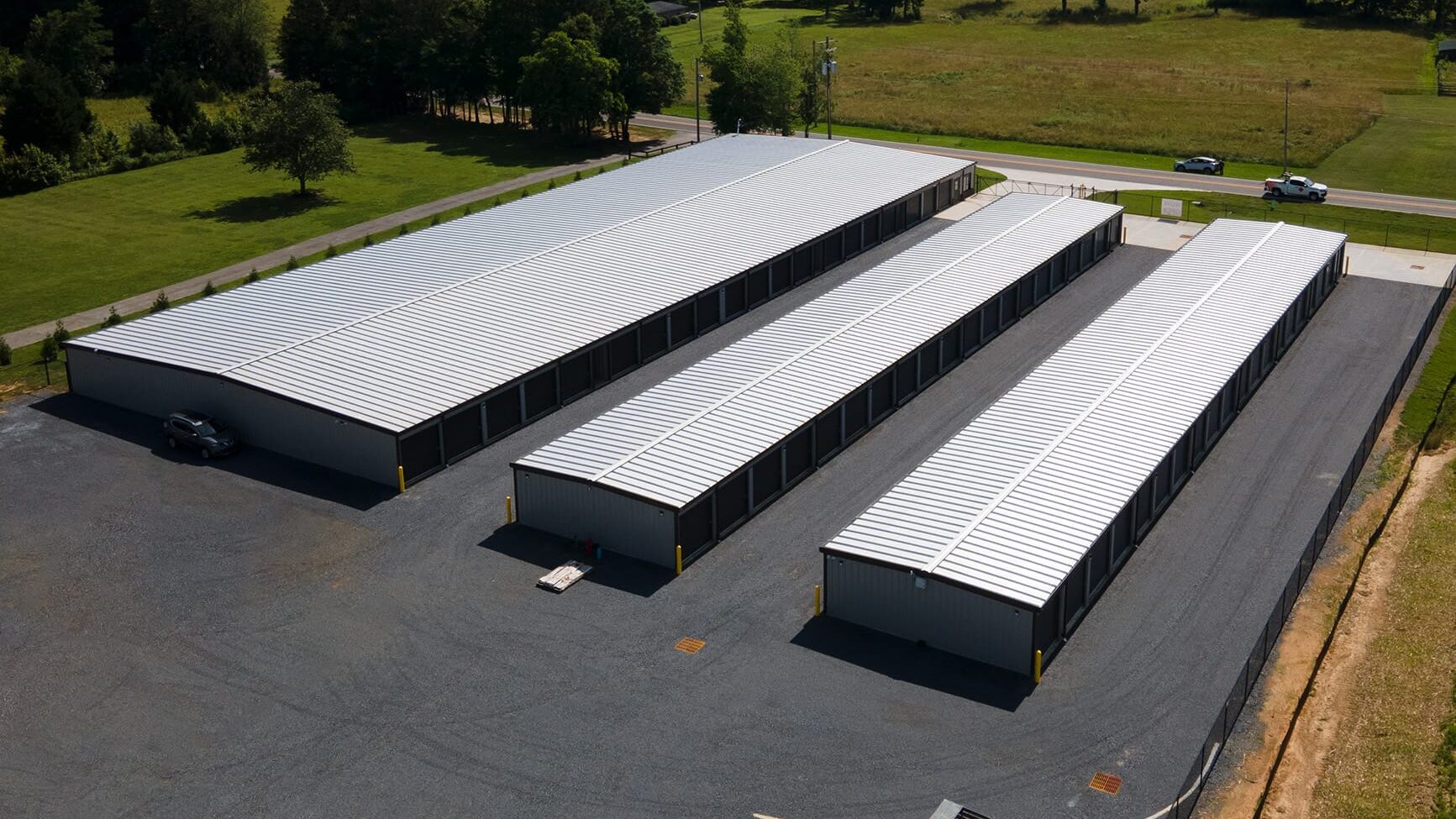
Suburban drive-up facility (10,000 gross sq ft, ~8,000 NRSF)
This facility targets a suburban residential market with moderate demand across all sizes. The mix leans toward mid-size units with a meaningful allocation of smaller sizes to boost revenue per square foot.
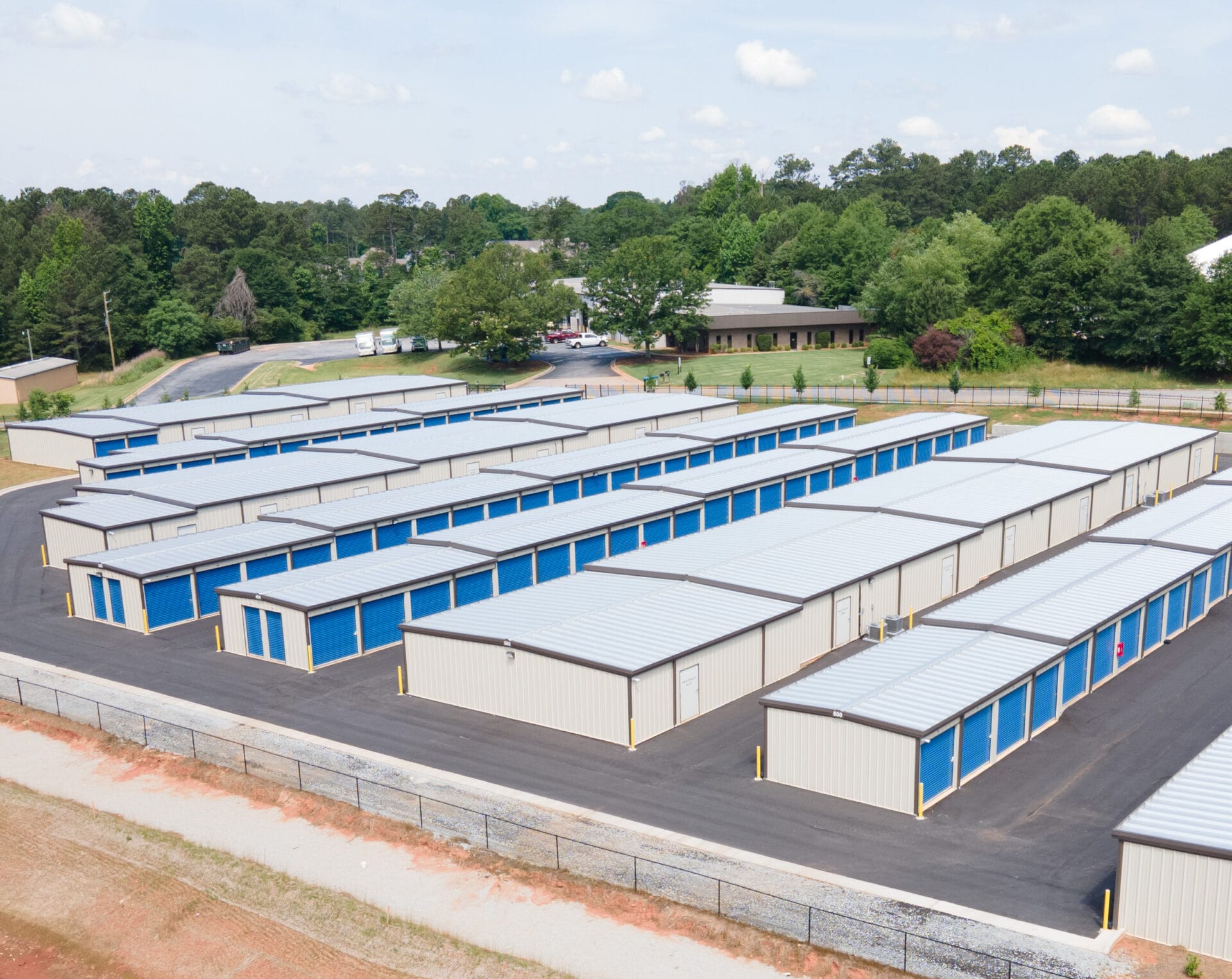
The mix: 10% in 5×5 units, 25% in 5×10, 35% in 10×10, 20% in 10×15, and 10% in 10×20. At typical suburban rates, this mix produces roughly 100 to 105 units and generates an estimated $0.90 to $1.10 per rentable square foot per month at stabilized occupancy. The blended monthly revenue on 8,000 NRSF would land in the range of $7,200 to $8,800.
Scenario 2
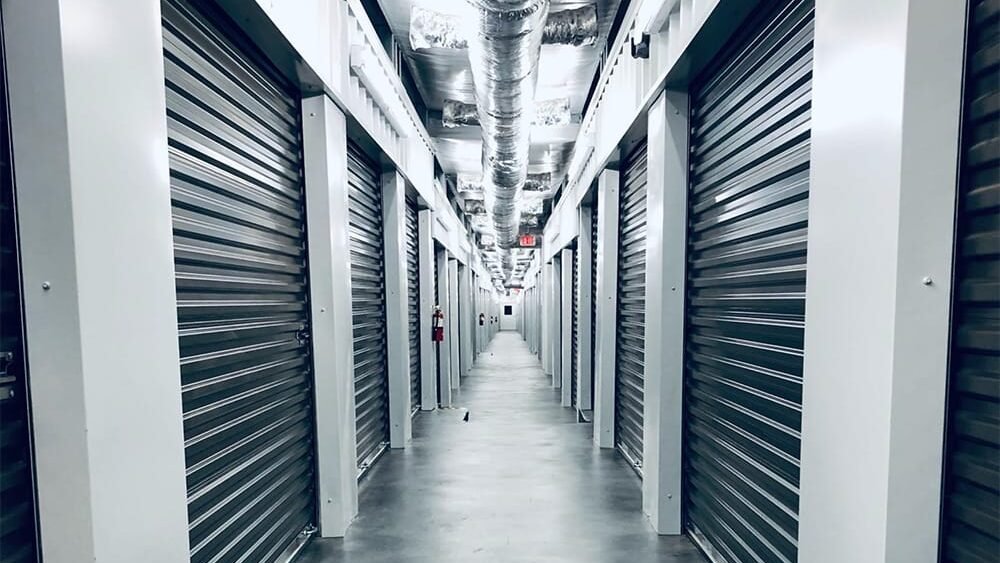
Urban climate-controlled interior facility (10,000 gross sq ft, ~7,300 NRSF)
This facility serves a dense urban market where tenants value temperature and humidity protection. The mix skews heavily toward smaller units because urban tenants typically store less volume per person.
The mix: 20% in 5×5 units, 35% in 5×10, 30% in 10×10, 10% in 10×15, and 5% in 10×20. Climate-controlled rates push revenue per square foot higher, typically $1.40 to $1.90 per rentable square foot per month. Even though NRSF is lower (interior corridors reduce efficiency to roughly 73%), the blended monthly revenue on 7,300 NRSF could reach $10,200 to $13,900.
Scenario 3
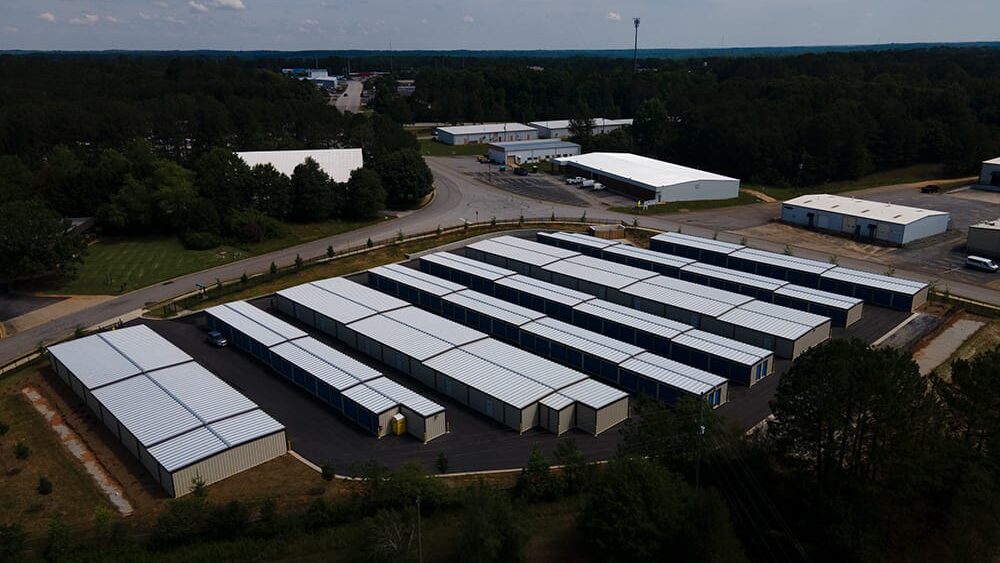
Mixed facility with climate and non-climate buildings (20,000 gross sq ft total)
This campus combines drive-up buildings for standard storage with a separate climate-controlled building. The drive-up portion (12,000 gross sq ft) follows the suburban mix from Scenario 1. The climate-controlled portion (8,000 gross sq ft) follows an urban-weighted mix similar to Scenario 2.
By blending both facility types on the same site, you diversify your tenant base and create two distinct revenue streams. The climate-controlled building generates higher revenue per square foot, while the drive-up buildings lease up faster and cost less to build. Together, the blended campus revenue per square foot typically falls between the two individual scenarios.This is where building design and unit mix strategy intersect directly. A mixed facility needs different building widths, roof styles, and framing configurations for the drive-up rows versus the climate-controlled building. TruSteel can quote both building types as part of a single project, with mini storage steel building kits engineered to your specific layout and county code requirements.

The 5×5 vs. 10×10 Demand Dynamic
One of the most debated questions in self-storage development is how heavily to weight small units versus standard 10×10s. Industry data consistently shows that 5×5 and 5×10 units often carry higher occupancy rates and longer average tenant stays than larger sizes. Tenants renting small units are frequently storing items they do not access often (documents, seasonal decor, keepsakes), which means less turnover and more predictable income.
At the same time, 5×5 units generate significantly more revenue per square foot than 10×10 or 10×20 units. For example, a 5×5 unit renting at $50 per month produces $2.00 per square foot. A 10×10 unit renting at $125 per month produces $1.25 per square foot. In this situation, the smaller unit wins on density even though it brings in less total rent per unit.
The catch is that small-unit demand varies by market. In college towns and urban cores, you can weight 5×5 and 5×10 units at 30 to 40 percent of your total mix and expect strong occupancy. In rural or suburban markets with larger homes and more garage space, that percentage might drop to 15 to 25 percent because fewer tenants need that size.
The takeaway: do not default to an all-10×10 facility. Research your local demand, and if the data supports it, shift your mix toward smaller units. The revenue per square foot math almost always favors it.
Climate-Controlled Unit Mix: How Much of Your Facility Should Be Climate?
Climate-controlled storage units typically command 15 to 30 percent higher rents than standard drive-up units of the same size. That premium makes climate-controlled space attractive from a revenue standpoint, but the construction cost is also higher ($65 to $75+ per square foot versus $45 to $55 for standard drive-up).
The right percentage of climate-controlled units in your total mix depends on your market. In hot and humid climates like the Southeast, where temperature and moisture damage are real concerns, 40 to 60 percent climate-controlled is common and well-supported by tenant demand. In moderate climates with mild summers and winters, 20 to 30 percent may be sufficient. In markets where climate-controlled competitors are already abundant, overbuilding that segment can lead to slow lease-up and rate pressure.
Within the climate-controlled portion of your facility, the unit mix itself should skew smaller than your drive-up mix. Climate tenants are often storing higher-value, lower-volume items (electronics, wine, art, documents, pharmaceuticals) that do not require large floor areas. A climate-controlled building with 25 to 40 percent of its mix in 5×5 and 5×10 sizes will typically outperform one loaded with 10×15 and 10×20 units.
Right-Sizing over Time: Converting Units to Optimize Revenue
Your opening-day unit mix does not have to be permanent. One of the advantages of steel building construction is that interior partition walls can be repositioned without affecting the primary structure. This gives operators the ability to right-size their mix as they gather real occupancy and demand data.
The most common conversion is splitting underperforming large units into smaller ones. A single 10×20 unit renting at $175 per month ($0.88 per square foot) can be divided into four 5×10 units renting at $75 each ($300 total, or $1.50 per square foot). That conversion can increase revenue on the same footprint by 30 to 40 percent or more, depending on local rates.
The reverse is also possible. If your market shows strong demand for larger units and your 5×10 inventory is sitting empty, combining adjacent small units into a single larger one can improve occupancy even if revenue per square foot dips slightly.
Track your conversion opportunities quarterly. Look for unit sizes with consistently low occupancy (below 80 percent for more than two quarters) alongside sizes with waitlists or 95+ percent occupancy. That imbalance is a signal to reallocate.
Revenue per Square Foot: the Metric That Matters Most
Occupancy rate gets the most attention, but it can be misleading. A facility at 95 percent occupancy with a poor unit mix might generate less total revenue than a facility at 85 percent occupancy with a well-optimized mix. The metric that tells the full story is revenue per square foot (RPSF).
RPSF is calculated by dividing your total actual rental income by your total net rentable square footage. It captures both occupancy and rate in a single number, which makes it the best way to evaluate whether your unit mix is working.
Track RPSF monthly and compare it against your pro forma projections. If RPSF is below target, dig into which unit sizes are underperforming. You may find that a handful of oversized units sitting vacant are dragging down the entire facility’s revenue density. That is a unit mix problem, not a marketing problem, and the fix is reallocation, not more advertising.
Design Your Building around Your Mix
Your unit mix should drive your building design, not the other way around. Once you have a mix grounded in local market research, the building dimensions, corridor layout, door count, and floor plan all follow naturally.
TruSteel provides mini storage steel building kits with county-specific stamped plans, 100% steel construction, and a 30-year manufacturer’s warranty on panels and columns. Whether you are building a single drive-up row or a multi-building campus with climate-controlled space, we can engineer the building package to match your exact unit mix and layout.
If you have a zip code, a target footprint, and an idea of your mix, you are ready to start. Contact TruSteel Buildings today for your free quote!