
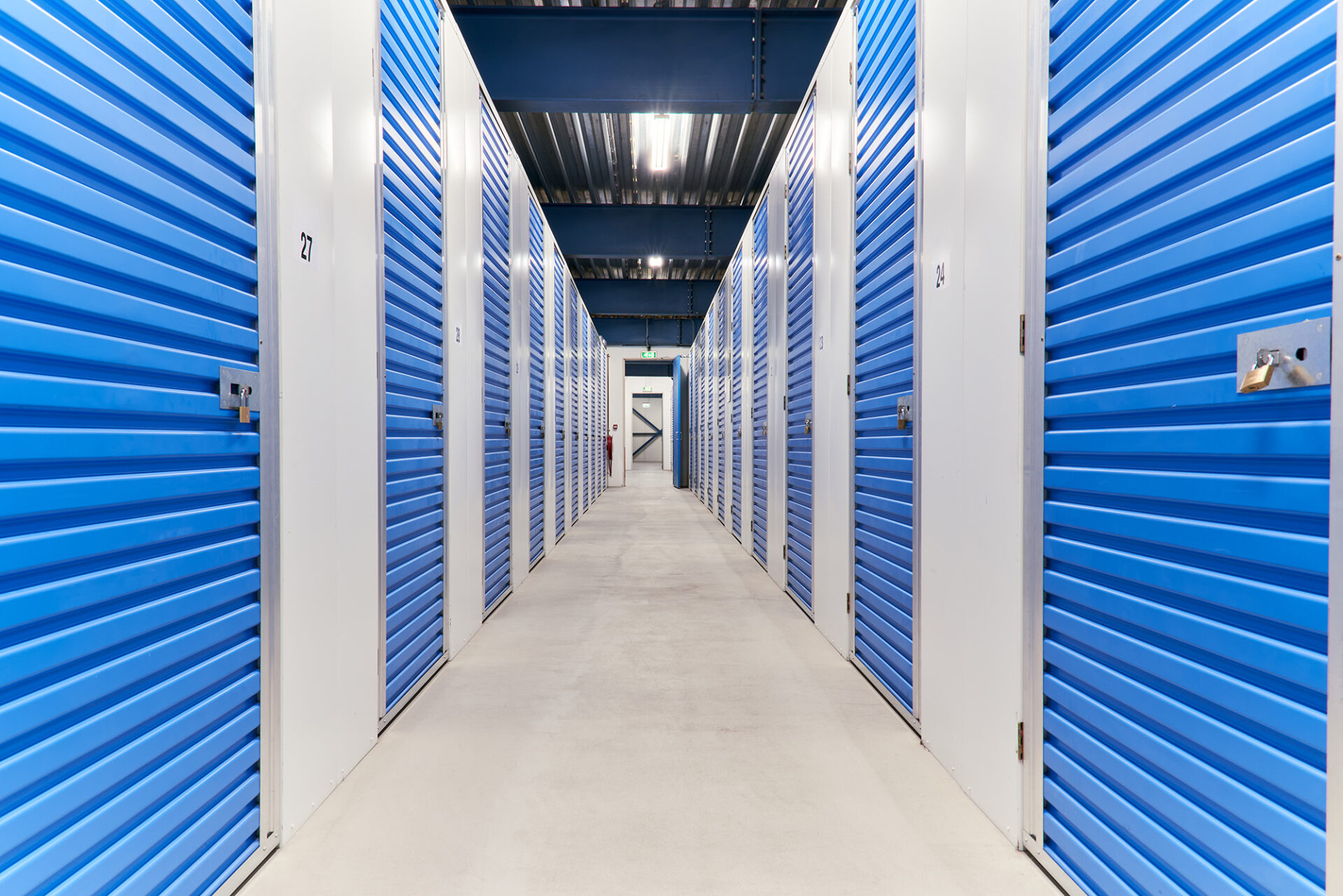
Why Steel Is the Preferred Construction Method for Climate-Controlled Storage
Pre-engineered metal buildings (PEMBs) dominate the climate-controlled self storage building market for the same reasons they dominate standard storage: speed, clear spans, cost efficiency, and expandability. But climate-controlled applications add several more reasons to favor steel.
Steel wall systems accept insulation easily. Fiberglass batts install between girts, spray foam adheres directly to panels, and rigid board can be applied as a continuous exterior layer. These options give designers flexibility to hit the R-value targets their climate zone requires without custom framing solutions.
Clear-span interiors eliminate interior columns that would interfere with corridor layouts, unit placement, and airflow distribution. A climate-controlled building needs unobstructed interior volume for air to circulate properly and for HVAC ductwork to route efficiently. Red iron framing delivers that.
The adaptability of pre-engineered steel also matters for phased projects. Many developers start with standard drive-up buildings and add a climate-controlled structure in a later phase. Steel framing ensures the new building can match the existing campus in dimensions, trim, and color while incorporating the envelope and mechanical upgrades that climate control requires.
Market Demand for Climate-Controlled Self Storage
Climate-controlled storage is one of the fastest-growing segments in the self-storage industry. Industry data shows that climate-controlled units command 25 to 45 percent higher rental rates than standard drive-up units of the same size. That premium reflects the added value tenants place on protecting sensitive belongings from temperature swings, humidity damage, mold, and pest exposure.
Demand is especially strong in Southern and coastal markets where summer heat and year-round humidity create real risks for stored goods. But the trend is not limited to warm climates. Cold-climate markets are seeing growing demand as tenants recognize that freeze-thaw cycles can damage electronics, wood furniture, and musical instruments just as effectively as heat and humidity.
For developers, the higher rental rates translate to stronger revenue per square foot and faster payback on the construction premium. For a detailed look at how climate-controlled units affect your unit mix strategy and revenue modeling, see our unit mix guide.
Design Principles for Climate Controlled Metal Buildings
Designing a climate controlled metal building requires a systems approach where the envelope, mechanicals, and moisture management work together. No single component can compensate for weaknesses in the others.
Building envelope
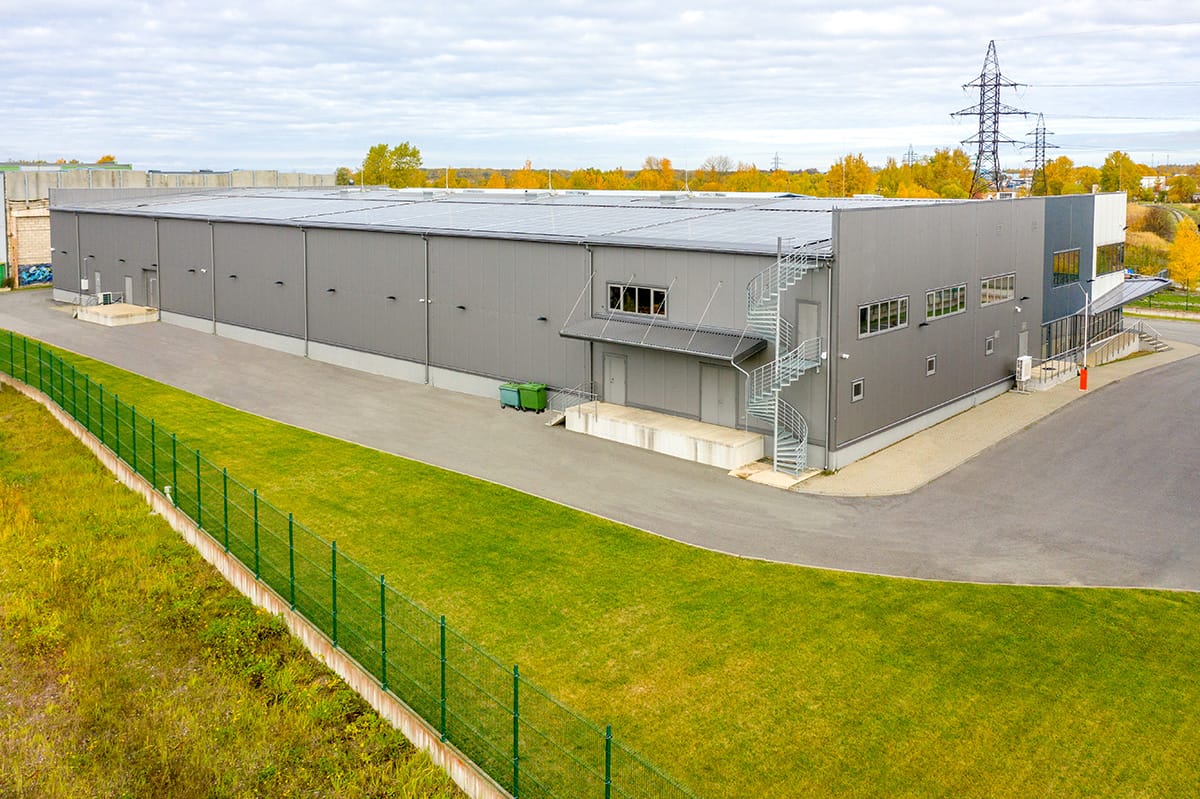
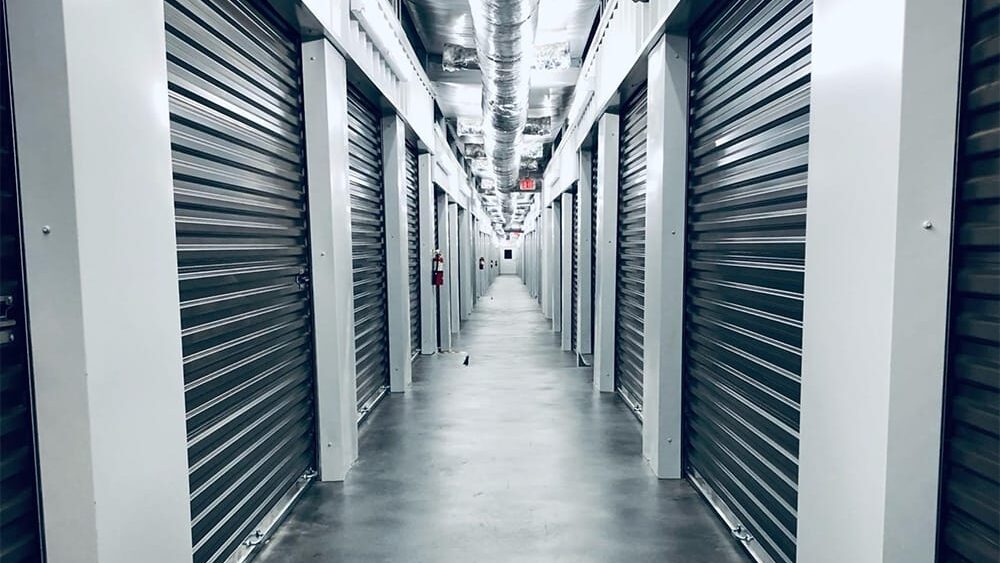
The envelope is the foundation. Insulation, vapor barriers, and air sealing determine how hard your HVAC system must work and how stable interior conditions stay. Climate-controlled buildings use interior corridor layouts (not exterior roll-up doors) because corridors can be sealed and conditioned while individual exterior doors create thermal breaks and moisture entry points.Entry vestibules at building access points reduce air exchange when tenants enter and exit. Mechanical rooms should be centrally located or placed at one end of the building with clear service access.
For a full technical walkthrough of envelope construction, insulation types, and vapor barrier placement, see our guide on how to build climate controlled storage units.
HVAC system selection and sizing
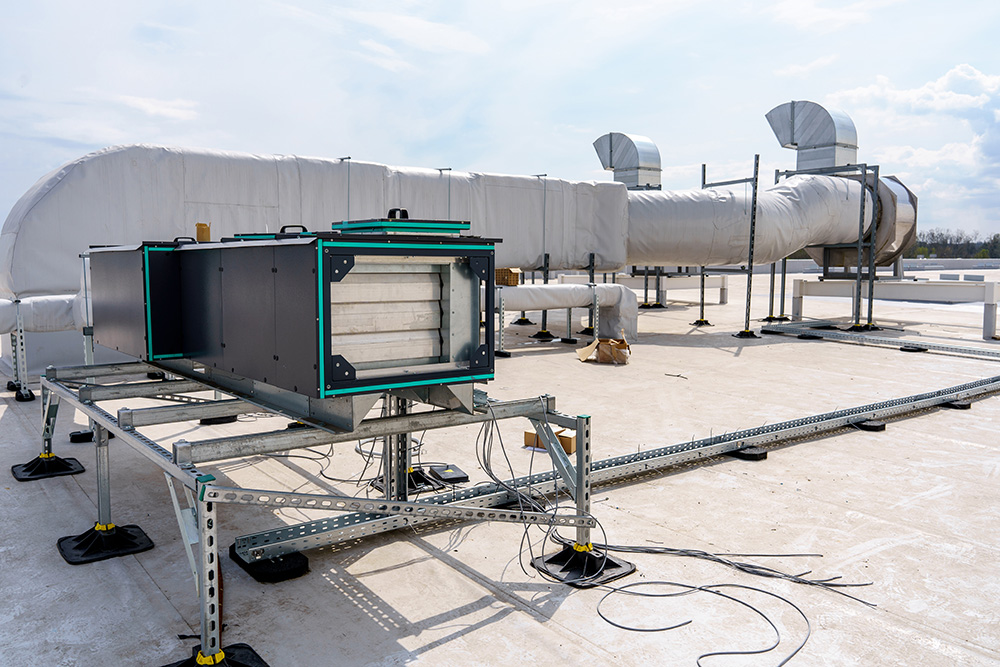
Climate-controlled storage requires less cooling capacity than occupied commercial spaces. The general sizing guideline is roughly 1 ton of air conditioning per 1,250 to 1,600 square feet, compared to 1 ton per 450 to 600 square feet for offices. Common system types include split systems, packaged rooftop units, and heat pumps. Heat pumps are increasingly popular because they handle both heating and cooling in a single unit.
Zoning the HVAC system lets you condition high-traffic areas more aggressively while maintaining baseline conditions in unit corridors. This balances tenant comfort with energy efficiency.
Humidity management
Air conditioning removes some moisture as a byproduct of cooling, but in humid climates, AC alone cannot maintain relative humidity below the 55 to 65 percent target, especially during shoulder seasons. Central dehumidifiers integrated into the air handler are increasingly standard for climate-controlled storage in the Southeast, Gulf Coast, and Mid-Atlantic regions. Budget for dedicated dehumidification from the start if your facility is in a humid market.
Insulation Overview: R-Value Targets by Climate Zone
Insulation R-value targets for a temperature controlled storage building vary by IECC climate zone. The industry standard minimum is R-19 (6-inch fiberglass) for walls and roof, but developers in extreme climates often specify R-25 or R-30 in the roof to handle direct solar heat gain.
The three most common insulation types for climate-controlled steel buildings are fiberglass batts (cost-effective, factory-installable, available in vinyl-backed white or black from TruSteel), closed-cell spray foam (higher R-value per inch at roughly R-6.5, doubles as a vapor barrier, eliminates thermal bridging), and rigid board (polyiso or XPS, used as continuous exterior insulation in high-performance envelope designs).Each type has tradeoffs in cost, installation complexity, and moisture performance.
For a detailed comparison of all three options, see our insulation comparison guide.
Construction Cost Premium for Climate-Controlled Buildings
Climate-controlled self storage construction typically costs roughly 15 percent more than a non-climate-controlled building of the same footprint. That premium covers insulation, vapor barriers, HVAC equipment, dehumidification, interior liner panels, finished corridors, and the additional electrical capacity to power the mechanical systems.
In dollar terms, climate-controlled facilities generally run $65 to $75 or more per square foot for the full build (package, slab, insulation, HVAC, interior buildout, and electrical), compared to $45 to $55 per square foot for single-story drive-up facilities.
The higher construction cost is offset by higher rental rates (25 to 45 percent above standard), stronger tenant retention (climate tenants tend to stay longer), and a higher facility valuation at stabilization. For operators running the numbers, the key question is not whether climate-controlled costs more to build, but whether your market supports the rental premium. If it does, the return on the incremental investment is typically strong.
For detailed cost modeling across facility types, see our mini storage steel buildings guide.
Ancillary Revenue: Premium Climate-Controlled Applications
Beyond standard household and business storage, climate-controlled steel buildings open the door to specialty storage segments that command even higher rental rates.
Wine storage requires tighter temperature control (55 to 58°F) and humidity management (60 to 70% RH) than standard climate-controlled units. Tenants in this segment pay significant premiums for reliable conditions.
Document and records storage serves businesses, law firms, and medical practices that need compliant, climate-stable environments for paper records, backup media, and archived files. These tenants sign longer leases and are less price-sensitive than residential storage customers.
Art storage serves galleries, collectors, and estates that need stable temperature and humidity to protect paintings, sculpture, and mixed-media works. The specifications are demanding, but the rental rates reflect the value of the items being stored.
Each of these segments requires a higher-spec climate control system and tighter envelope performance, but they also diversify your tenant base and push revenue per square foot well above standard storage rates.
Build Your Climate-Controlled Facility with TruSteel
TruSteel provides climate-controlled steel building kits engineered to your specific location and building code requirements. Every package includes county-specific stamped building and foundation plans, 100% steel primary and secondary framing, roof and wall sheeting, complete trim and closure, fasteners, and delivery to site. Panels and columns are backed by a 30-year manufacturer’s warranty.
If you have a zip code, a target footprint, and an idea of your facility model, you have enough to get started. Contact TruSteel Buildings today for a free quote!