

Why Mini Storage Steel Buildings Dominate the Self-Storage Industry
A mini storage steel building kit delivers clear-span interiors without load-bearing columns, which means maximum flexibility when designing your unit mix and layout. Steel framing goes up faster than block or tilt-up concrete, so your facility reaches leasable condition sooner. And once it’s standing, a metal self storage building requires less long-term maintenance than wood-frame or masonry alternatives.
The expandability factor is just as important. Most storage developers plan to build in phases, adding rows or entire buildings as occupancy climbs. Steel buildings support that approach because additional structures bolt up quickly using the same framing system and can be ordered to match the original building’s dimensions, trim, and color.
Whether you are a self-storage developer evaluating your first project or a general contractor pricing a multi-phase campus, this guide covers the full scope of planning, designing, and building a mini storage facility with steel.
Planning Your Mini Storage Project
A strong project starts before any steel is ordered. The planning phase determines whether your facility will lease well, get approved without delays, and stay within budget.
Market feasibility
Start with demand. Research the existing supply of storage in your target area, the current occupancy rates at nearby facilities, and the types of units that are leasing fastest. If climate-controlled storage is underserved in your market, that shapes both the building type and the construction scope. A feasibility study does not need to be complex, but it should confirm that renters exist, the market is not overbuilt, and your site has the visibility and access to compete. For a deeper look at this process, see our mini storage business plan guide.
Site selection and parcel sizing
For a single-story drive-up mini storage facility, plan on 3 to 5 acres as a starting point. That acreage needs to accommodate buildings, drive aisles (24 to 26 feet wide for vehicle access), parking, stormwater retention, setbacks, and landscaping buffers. After all of those deductions, only about 30 to 50 percent of the total acreage is typically buildable.
Multi-story makes sense when land cost is high enough to justify the added construction complexity. A two-story or three-story climate-controlled building can multiply your rentable square footage on a smaller footprint, but it adds elevators, stairwells, fire-rated corridors, and higher per-square-foot construction costs.
Zoning and entitlements
Self-storage zoning varies significantly by jurisdiction. In some counties, storage is a use-by-right in commercial or industrial zones, which means you can proceed with a site plan review and building permit. In others, it requires a conditional use permit or special exception, which adds public hearings, review timelines, and potential design conditions to the approval process.
Check zoning early. A site that is easy to approve is almost always more valuable than a cheaper parcel stuck in approval limbo for months. TruSteel can provide county-specific stamped building and foundation plans where required, which helps move the permitting process forward once your entitlements are secured.
Roof style: single-slope vs. gable
Single-slope (also called mono-slope or shed-style) roofs are common on drive-up storage rows because they shed water to one side and keep the building profile low. Gable roofs are more typical on climate-controlled or multi-story buildings where a larger interior volume is needed for ductwork, insulation depth, and mechanical systems. Both work well with pre-engineered steel framing.
Drive-up vs. interior corridor layouts
Drive-up units are accessed directly from the outside, with tenants backing a vehicle up to the roll-up door. This layout is operationally simple, cost-effective to build, and the most space-efficient option for single-story facilities.
Interior corridor layouts place units along enclosed hallways inside a larger building. This is the standard configuration for climate-controlled storage. Interior corridor buildings have lower space efficiency (roughly 72 to 75 percent of gross square footage is rentable, compared to 75 to 85 percent for drive-up) because the hallways, stairwells, and elevators consume floor area. But they command higher rental rates and attract tenants storing temperature-sensitive items.
For a detailed look at how these layout choices affect your total unit count, see our guide on how many storage units fit in a steel building.
How unit mix shapes building design
Your storage unit mix, the ratio of small, medium, and large units, affects everything from the number of roll-up doors you need to the partition wall layout inside each building. A facility loaded with 5×5 and 5×10 units will have a higher unit count but more doors and partitions per linear foot than a facility weighted toward 10×15 and 10×20 units.The right mix depends on your local market. Suburban sites with residential demand tend to lean toward smaller units. Sites near commercial or industrial corridors often need a heavier weighting of 10×15 and 10×20 sizes. Lock your unit mix strategy before finalizing your building order, because changes after fabrication can be costly.
Planning
How to Estimate Mini Storage Building Cost
If you’re wondering how much does it cost to build a storage facility, the real answer is: it depends on your site, scope, and local code.
Industry cost guides often show wide construction ranges (for example, $25–$110 per square foot, excluding the cost to buy the land itself). Use this page to turn that range into a budget you can stand behind.
For early budgeting, separate costs into a few clear buckets:
- Electrical/lighting/security (plus HVAC if climate controlled)
- Site work + utilities
- Slab/foundation
- Building package + doors
Basic pro forma assumptions for mini storage
While every project is unique, the following ranges give developers and general contractors a starting framework for early-stage budgeting.
For single-story drive-up mini storage, construction costs (building package, slab, doors, and basic electrical) typically fall in the $35 to $55 per square foot range. Climate-controlled facilities run higher, generally $65 to $75 or more per square foot, because of the added insulation, HVAC, air sealing, interior build-out, and fire protection requirements.
On the revenue side, non-climate-controlled units average roughly $0.75 to $1.25 per rentable square foot per month in many markets, while climate-controlled units can command $1.25 to $2.00 or more depending on location and competition. Most lenders and investors look for breakeven occupancy in the 55 to 65 percent range, with stabilized net operating income (NOI) margins of 55 to 70 percent once the facility reaches mature occupancy.
These numbers are directional, not a substitute for a full financial model. Your actual cost and revenue picture will depend on your specific site, market, and scope. For a location-specific building package quote, request a free estimate from TruSteel.
Site Preparation
Site Improvements and Development Costs
Site prep cost for a storage facility is one of the biggest budget swing factors. Grading, drainage, and utility runs can change totals fast, even when the building footprint stays the same.
Plan for clearing, stormwater, drives, and access from the start. Permits, inspections, and any required off-site improvements are also location-dependent, so build time into your schedule for reviews and revisions.
Design
Architectural Details and Finishes
Design is where cost meets leasing. Door count, unit mix, and traffic flow affect how the facility operates and how fast tenants can move in. Your mini storage facility design should balance visual appeal with durability, because storage buildings see heavy daily use from tenants loading and unloading.
Keep finishes practical. Durable roll-up doors, clean trim details, and properly graded drainage reduce ongoing maintenance costs and improve the customer experience. If you plan to compete for climate-controlled tenants, interior finishes like liner panels, epoxy flooring, and well-lit corridors become important leasing differentiators.
Cost Analysis
Key Numbers in Building Storage Units
You may be looking for hard numbers, but treat these as planning guardrails as every project is unique. Many estimates place basic construction-only costs for simpler single-story drive-up builds in the $35 to $55 per square foot range, while climate-controlled facilities can run $65 to $75 or higher once insulation, HVAC, and interior build-out are included.
- Cost Per Square Foot: Building a storage unit typically costs between $25 to $75 per square foot, depending on the quality of materials and location. For example, a 10,000-square-foot facility could range from $250,000 to $750,000 in construction costs alone (SecureSpace).
- Land and Site Improvement Costs: The cost of land and site preparation, including permits and necessary infrastructure improvements, can significantly add to the overall expenses. These costs vary widely by market and site conditions, so get a site-specific estimate early in your planning process. (costhack.com).
- Climate-Controlled Units: Adding climate-controlled units to your storage facility can increase costs by 15% or more, depending on the insulation system, HVAC sizing, and local energy code requirements. These units are essential in areas with extreme weather conditions to protect sensitive items (Storelocal).
- Revenue Potential: Average monthly rents for non-climate-controlled units vary by market, but generally fall in the $100 to $175 range for a standard 10×10 unit. Climate-controlled units command a premium because tenants value temperature and humidity protection for sensitive belongings (Statistica).
Use these “reality checks” when you compare potential numbers:
- A low $/SF can hide big site and utility costs.
- More doors and a mixed unit layout usually increase labor and hardware.
- Climate-controlled units typically increase scope because you add insulation, air sealing, HVAC planning, and interior build-out.
Site and permitting items can add tens of thousands depending on conditions and jurisdiction requirements. If you need a tighter budget, lock your facility model and ask for a scope breakdown so you know what’s included and what’s not.

Construction
Construction Timeline for Mini Storage Steel Buildings
Construction costs include labor, materials, and equipment, but the timeline is just as important to your pro forma. Every month between groundbreaking and first lease is a month without revenue.
A typical mini storage steel building project follows this general sequence:
- Entitlements and site plan approval: varies by jurisdiction, but plan for 2 to 6 months depending on whether storage is a use-by-right or conditional use in your zone
- Design and engineering: 2 to 4 weeks for basic projects, 8 to 16 weeks for complex scopes
- Permitting: 2 to 8 weeks depending on local review cycles
- Steel fabrication: 10 to 15 weeks from approval of final drawings
- Site work and foundation: runs concurrently with fabrication in most cases
- Erection and exterior completion: 1 to 2 weeks for a standard single-story building
- Interior build-out, doors, and MEP: varies based on scope
For a more detailed breakdown, see our full guide on pre-engineered metal building construction timelines. If you’re using a mini storage building kit, confirm what the “kit” includes and what it doesn’t. Site work, slab, MEP, and installation may not be included. A clear scope of work prevents surprise change orders and makes bids easier to compare.
Cost Factors
Factors Affecting Storage Building Costs
Several factors influence storage building costs, including the choice of materials, labor costs, and location. High-quality materials may have a higher upfront cost but can save money on maintenance and repairs in the long run.
Labor costs vary based on the complexity of the project, the availability of experienced steel building erectors in your area, and regional wage differences. The location of your facility also drives costs related to permits, inspections, code compliance, and local engineering requirements. Understanding these factors helps in making informed decisions for your investment during the construction process.
Size and Space
Square Feet and Building Sizes
The overall size of the project drives total spend, but it can also improve efficiency. Some costs don’t scale linearly, so larger projects may seem to have a “better” cost per square foot at first—until site constraints or infrastructure limits kick in.
If this is your first mini storage development, consider phasing your project. Build a first phase that matches the current market demand for your area, then expand as occupancy grows. Just make sure the original layout has room to support future building rows, drive aisles, and utility runs. Popular starting sizes include 30×100, 40×100, and 80×100 mini storage steel buildings.
Climate Control
Climate-Controlled vs. Standard Mini Storage Buildings
Climate-controlled storage can attract tenants who want temperature and humidity protection. It can also increase the build scope because you’re adding building envelope details and mechanical planning.
Focus on the basics: insulation approach, ventilation, and condensation control. In humid climates like the Southeast United States, these details matter for long-term performance. Before you commit, research the local demand for climate-controlled storage units and see what your competitors are offering so your investment matches what your market will pay for. Here is more information on how to build climate-controlled units.
The cost premium for climate-controlled construction is real, but so is the revenue upside. Climate units typically rent for 25 to 50 percent more per square foot than standard drive-up units. If your market supports that premium, the higher construction cost can pay for itself through stronger cash flow and higher facility valuation at stabilization. We will publish a detailed climate-controlled storage pillar guide soon with a deeper dive into envelope design, HVAC considerations, and operational differences.
Kit vs. Turnkey: Understanding Your Build Options
When you buy a mini storage building kit, you receive the pre-engineered steel framing, roof and wall sheeting, trim, closures, fasteners, and (with TruSteel) stamped building and foundation plans. You then coordinate your own general contractor for site work, foundation, erection, MEP, and interior build-out.
A turnkey approach bundles more of those trades under a single contract. You get fewer handoffs and one accountable partner for a larger portion of the project, but you also give up some control over individual trade selection and scheduling.
The right choice depends on your experience, your team, and how much project management bandwidth you have. First-time developers often benefit from a kit approach paired with a strong local GC, because it keeps the building package cost transparent while leaving trade coordination to someone with local relationships.

Location
Rural Areas vs. Urban Areas
Urban builds often come with higher land prices, higher labor costs, and tighter sites. Review timelines can be longer, and utility coordination may be more complex.
Rural sites may offer lower land cost, but you may spend more on infrastructure if utilities are farther away. The right location depends on competition, visibility, access, and where renters live and work.
Budgeting
Budgeting for a Storage Unit Building
Effective budgeting is critical for building a mini storage facility. Start by estimating all costs across three categories: development (land, entitlements, engineering, and soft costs), construction (site work, foundation, building package, doors, and MEP), and ongoing operations (insurance, management, marketing, and maintenance). Separating these categories makes it easier to identify where the biggest risks and unknowns live in your budget.
Build a contingency of 10 to 15 percent into your construction budget for unforeseen conditions. Soil surprises, utility relocation, and permitting delays are common on first-time storage projects. A realistic budget with built-in contingency is more useful than an optimistic number that falls apart at the first change order.

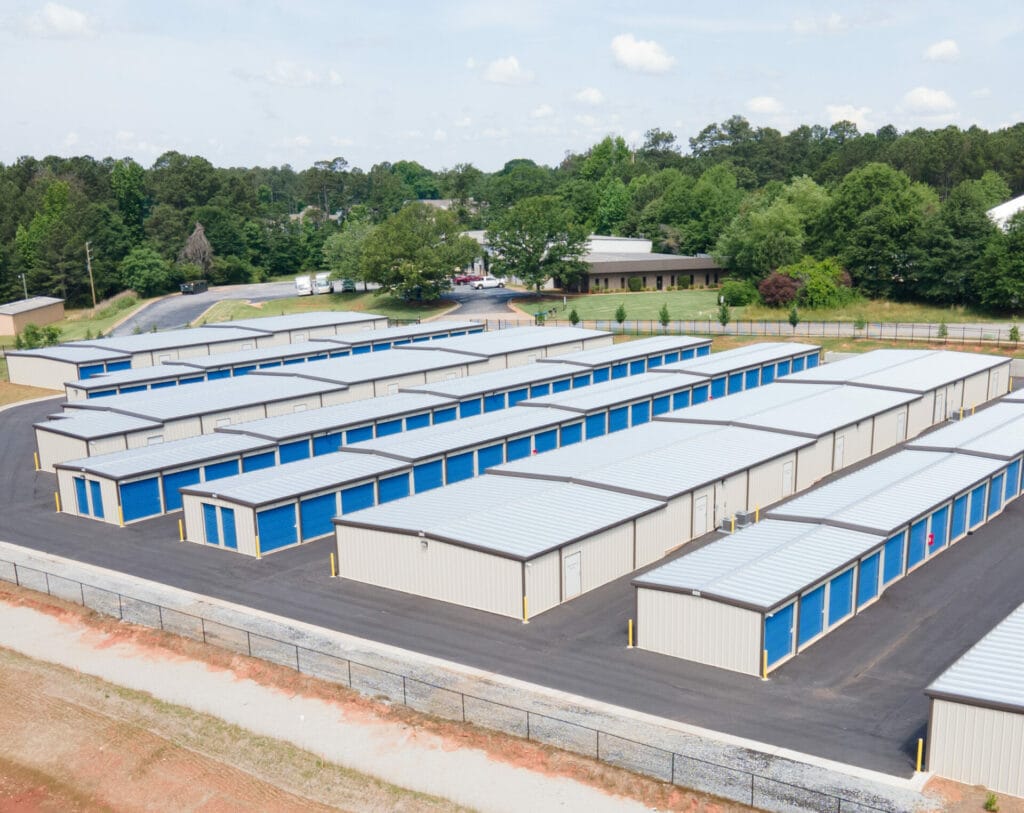
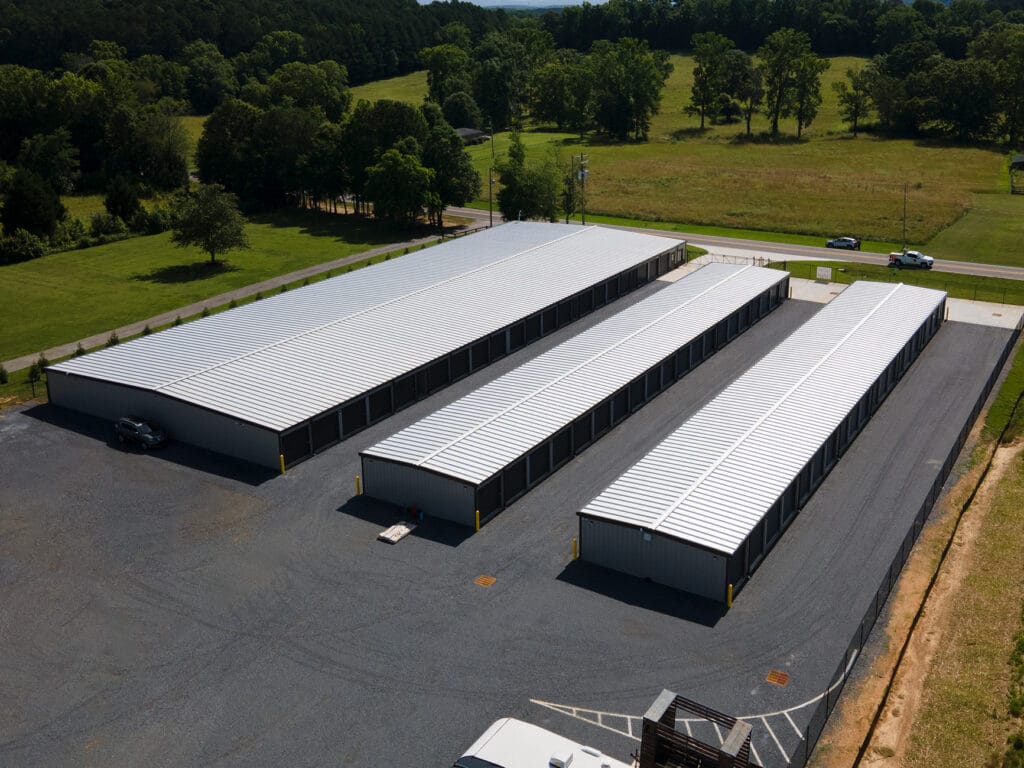
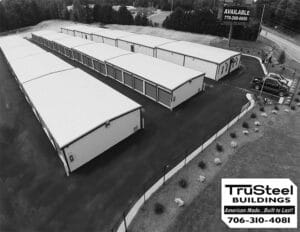
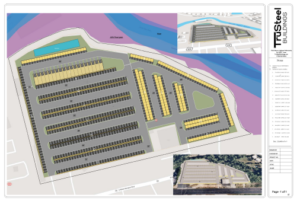
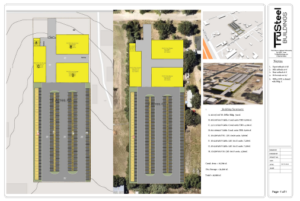
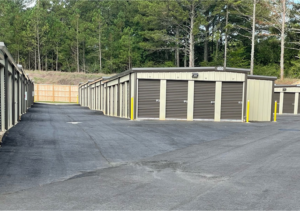
Why trust us? We have been building mini storage units for years!
From site plans to actual buildings, we have you covered.
Professional Help
Get a Location-Specific Quote for Your Mini Storage Steel Building
If you want fewer surprises, work with a partner who prices to your location and understands permitting. TruSteel supports storage projects with 100% American-made steel building kits and an IAS-accredited manufacturing and vendor supply chain.
Where required, we can provide county-specific stamped building and foundation plans. With the right inputs, we can typically deliver a quote plus a preliminary sketch in 24–72 hours. Panels and columns are backed by a 30-year manufacturer’s warranty, and you get a single point of contact from quote through delivery.
For a more accurate quote, have the following information ready:
- Project zip code / address
- Target footprint and wall height
- Drive-up, climate-controlled, or mixed
- Rough site plan + unit mix
- Timeline goals and delivery constraints
If you’re comparing mini storage building kits or self storage building kits, start with a scope review and a location-based quote. Get a free quote to see what your project looks like on paper before you commit.
Whether you are comparing mini storage building kits for a first-time project or pricing a multi-phase campus, start with a scope review and a location-based quote.